
Wallacea Living Case Study
Rebuilding a enterprise website on a platform the team could run themselves
Migrating Wallacea Living from a Sanity, Next.js and Vercel build onto Webflow, carrying the integrations, the compliance and the content across intact, and handing the marketing team the keys.
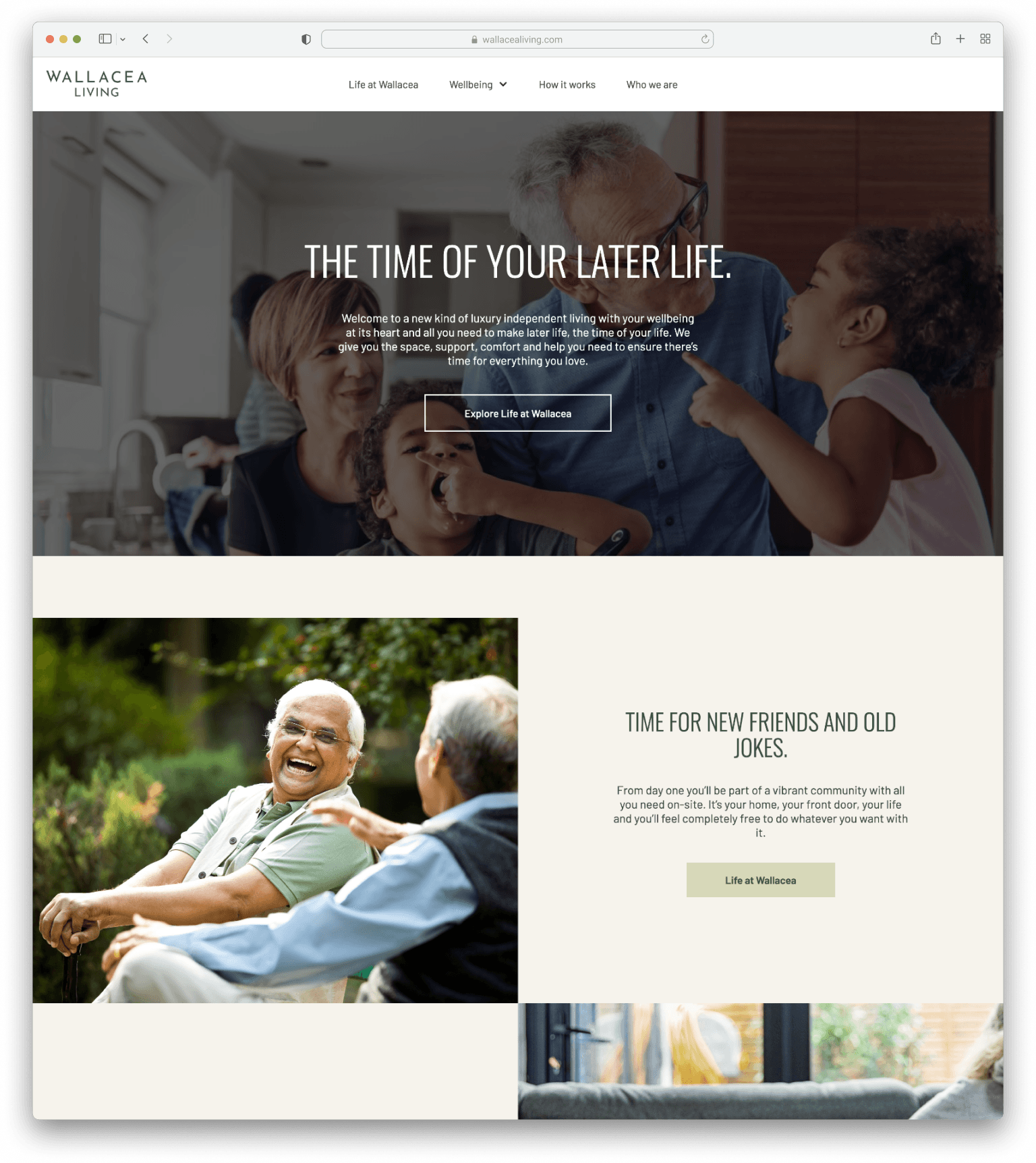
Wallacea Living was selling something nobody could visit yet.
The first community was still ahead of it, which made the website less of a shop window and more the whole of the business's public face. It had to build an audience, hold their attention across a long lead-in, and turn that into a pipeline of prospective owners before a single door opened.
A site doing that job needs to change constantly. Wallacea's was built so that it could not, at least not without a developer. Content sat in Sanity, the front end was Next.js on Vercel, and anything past swapping a paragraph queued behind engineering time the business would rather have spent elsewhere.
We rebuilt the site in Webflow. Same brand, same integrations, same legal furniture, but a platform the people responsible for the content could actually operate.
What is Wallacea Living
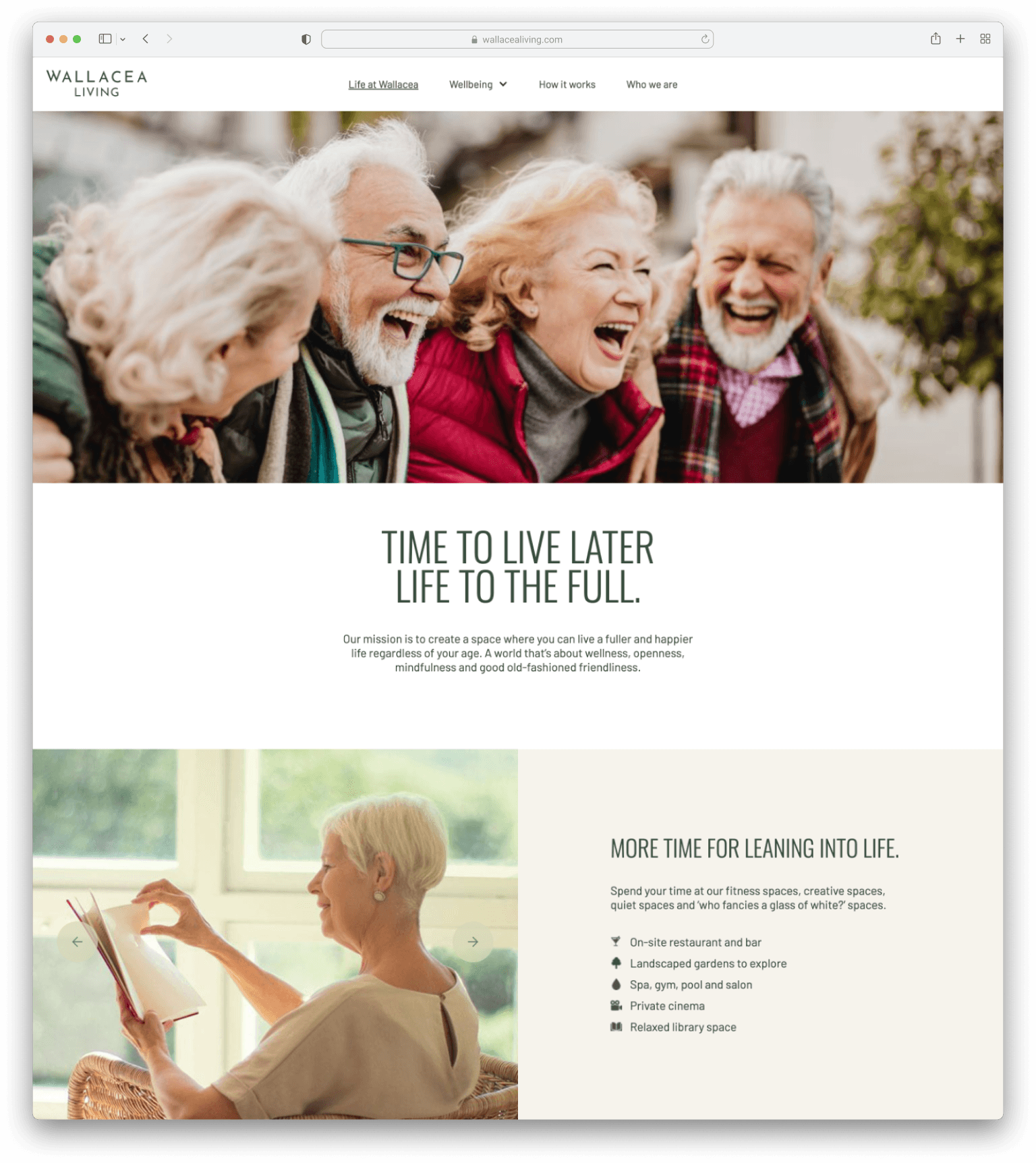
Wallacea Living is a luxury later living operator, founded on the argument that getting older should not mean slowing down. Its communities pair independent apartments, each with its own front door, with facilities more usually found in a hotel: restaurant, cinema, library, gym, pool, spa and gardens.
The differentiator is wellbeing. Owners get six-monthly wellbeing MOTs, personalised plans from an in-house team, priority access to a private GP portal, and care in their own home if they come to need it.
That shapes the digital work. Buying into a Wallacea apartment is a property purchase, made slowly and usually with family involved, and at the time of this project made entirely on the strength of what the website could show. There was no community to walk around. The site had to do the convincing on its own.
Why Webflow
Webflow was chosen for the operating model rather than the technology. A headless stack is the right answer when a business has developers to spare. Wallacea did not, and the cost of that showed up as a queue: everything from an events listing to a residence description waited on someone technical.
Webflow moves the everyday work back to the people who own the content. Marketing publish news and events. Operations correct residence detail. Nothing routine needs a deployment, and the technical capacity the business does have goes to the things that actually need it.
Carrying the integrations across
Salesforce Web-to-Lead. Enquiries are the point of the site, so the enquiry path was treated as the thing that could not break. Forms post directly into Salesforce, landing in the CRM the sales team already works in rather than an inbox someone has to remember to check. We split the contact forms so an enquiry arrives already sorted by what the person actually wants, which is worth more to a sales team than a single undifferentiated form.
Cookiebot. Consent was rebuilt properly rather than approximated. A UK operator in a regulated sector cannot treat a consent banner as decoration, and getting it right in the migration meant it did not become a problem to solve later under pressure.
Google Maps. The location experience runs on a custom Google Maps JavaScript implementation built to sit inside Webflow, rather than an embed that would have looked like one. The homepage carries a static map treatment, which loads immediately and does the job the homepage needs without the weight of a live map on a page most people are only passing through.
Content the team could run

Residences CMS. The residences were built as a proper CMS collection with a template, so the pages behave as a system rather than a set of hand-built pages that drift apart over time. For a business whose portfolio was going to grow, that meant a new community could be added as a content entry rather than a build.
News and events. A combined feed with filtering, so a visitor can find the thing they came for, plus a single-page view for events that gives each one somewhere to live and something to share. Both are editable by the marketing team without help.
Navigation and structure. A Care item was added to the main navigation, and the Life@ pages and footer were reworked so the site's structure matched the way the business actually describes itself.
The design work that came with the build

A migration is a rare chance to improve things while everything is already open, so a set of improvements went in alongside the rebuild rather than waiting for a later project. A video header, a promotional bar for whatever the business needs to push that month, a hide and show navigation that gives long pages their full width back, considered animation through the page, and a gallery and carousel treatment for the imagery that does most of the persuading on a later living site.
Mobile was treated as a fix list rather than an afterthought, and worked through properly, because a significant share of enquiries begin on a phone, often with an adult child researching on a parent's behalf.
Scope, handled in the open
Partway through, the property pages came out of scope. That is a normal thing to happen on a project of this shape, and how it is handled matters more than the fact of it.
Rather than simply deliver less, we agreed a set of improvements to go in within the same fee, and put the whole thing in writing: what had come out, what was going in, what remained explicitly out of scope, and what reinstating the property pages would cost and do to the timeline if the business changed its mind. Nobody had to remember a conversation, and there was no argument later about what had been agreed.
Results
Migrated the full Wallacea Living site from Sanity, Next.js and Vercel onto Webflow, with the brand, content and structure carried across intact
Rebuilt the Salesforce Web-to-Lead enquiry pipeline, with contact forms split so enquiries arrive already routed
Rebuilt the consent layer on Cookiebot as part of the migration rather than as a later fix
Built a custom Google Maps JavaScript implementation inside Webflow, with a fast static map treatment on the homepage
Delivered the Residences CMS and a filterable news and events feed with single-page event views, all editable by the marketing team
Added a video header, promotional bar, hide and show navigation, gallery and carousel, page animation and a full mobile pass within the build
Handed over a site the client's own team could publish to and maintain without a developer
Delivered and handed over
The site went live on Webflow with the marketing team publishing to it directly, which was the point of the exercise. What had been a queue for engineering time became a task someone could finish in an afternoon.
That is usually the real return on a migration like this one. Not the platform, but who is able to use it.